Tears of the Desolate Mountain (Huang Shan Lei)
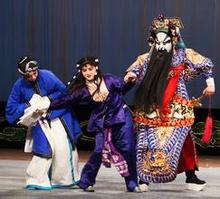
Overview. Tears of the Desolate Mountain (also called Pray for Peace) is one of Cheng Yanqiu's representative works, a classic of the Cheng-school (Chengpai qingyi) tragedy, renowned for its profound social critique and its deep, winding melody.
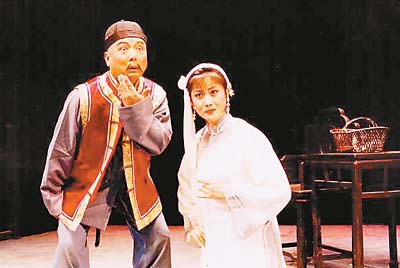
Synopsis. In the late Ming, under the Tianqi era, the area of Henan is crushed by heavy taxes and levies amid war and chaos. The peasant Gao Liangmin, to evade corvée and conscription, goes into the mountains with his son to gather medicinal herbs; father and son both perish to tigers and rampaging soldiers. His grandson is pressed into service; his daughter-in-law despairs and takes her own life; her husband Kuang Zhong also dies in the turmoil. A family once whole is destroyed by extortionate taxation and years of war, leaving only the daughter-in-law Zhang Huizhu. Driven to the brink of madness by grief and fury, she flees into the desolate mountains and finally perishes, her tears spent and her hatred exhausted.
Artistic Features. Cheng Yanqiu, with his unique Cheng-school vocal style — "deep and winding, broken yet continuous" (drawing heavily on the "back-of-the-head" resonance, ghost tones, and mournful slow boards and erhuang) — portrays Zhang Huizhu's journey from shock to grief, from resentment to madness, writing the sufferings of the common people with piercing precision. The whole play moves the heart with a tragic aesthetic of "sorrow without self-indulgence, resentment without anger," a pinnacle of Cheng-school singing and characterization.
Why Watch. Transcending ordinary tales of woe, Tears of the Desolate Mountain is a sober interrogation of the suffering of the age — a benchmark of the dan (qingyi) tragedy and a must-perform, must-hear work for Cheng-school heirs and aficionados.
猜你喜欢

Rickshaw Boy (Camel Xiangzi)
2026-10-15
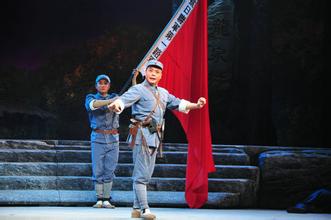
Yang Jingyu (Yang Jing Yu)
2026-10-15
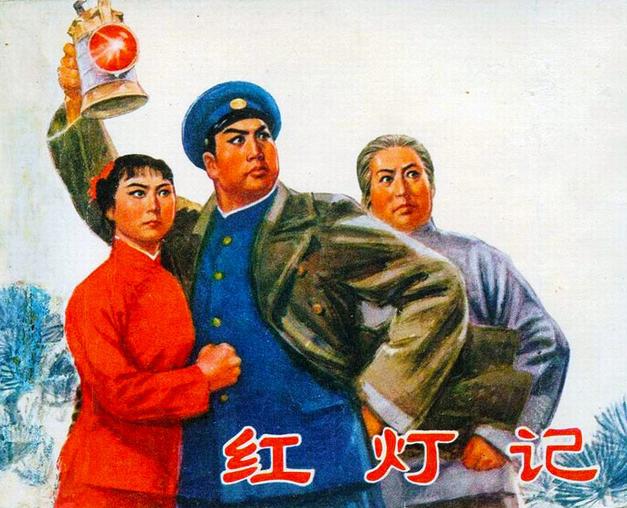
The Red Lantern (Hong Deng Ji)
2026-10-15
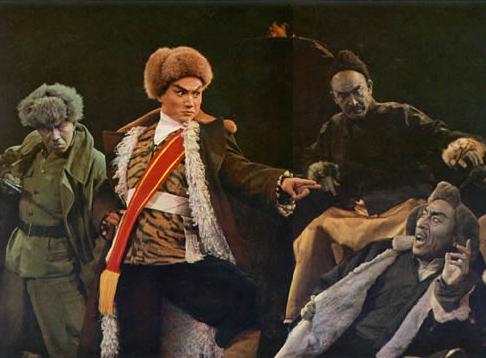
Plaster Zhang (Gao Yao Zhang)
2026-10-15