Taking Tiger Mountain by Strategy (Zhi Qu Wei Hu Shan)
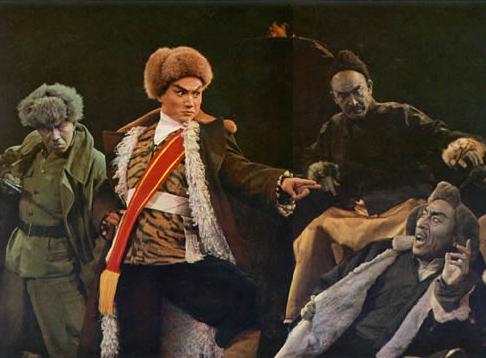
Overview. Taking Tiger Mountain by Strategy is the first of the eight revolutionary model plays, meant to show the People's Liberation Army's bandit-suppression struggle in the Northeast.
Synopsis. In the winter of 1946, early in the War of Liberation, the PLA won brilliant victories on the Northeast battlefield. A pursuit team led by a regiment chief-of-staff, following Chairman Mao's directive "Build Stable Base Areas in the Northeast," enters the deep mountains and forests to mobilize the masses, wipe out bandits, consolidate the rear, and coordinate with the PLA to smash the American-Chiang offensive. The bandit chief the Hawk (Zuoshan Diao), a Nationalist-absorbed bandit leader, burns, kills, and loots everywhere, hated to the bone by the people; after being badly beaten by our army he flees back to his Tiger Mountain lair, hoping to rely on the perilous terrain to resist to the end. The Tiger Mountain fortifications are complex and unsuited to a frontal assault; they can only be taken by strategy. Reconnaissance platoon leader Yang Zirong, scouting along the way and questioning the bitter in the mountains, with the help of the old hunter and his daughter finds a bandit lead and seizes the "secret liaison map" the Hawk has long coveted. By interrogating the captured bandit Luan Ping he also learns of the "Hundred-Chicken Feast." At Yang Zirong's request, after discussion by the Party branch committee and the soldiers' democratic meeting, the chief-of-staff sends Yang Zirong disguised as a bandit, pretending to offer the map, to infiltrate Tiger Mountain. Bearing the people's trust, Yang Zirong enters the bandit den and, with revolutionary wisdom and courage, survives the Hawk's repeated interrogations and probings, wins the enemy's confidence, and promptly sends out intelligence. The chief-of-staff leads the pursuit team into Jiapigou, mobilizes the masses to restore production, and organizes the militia. Railway worker Li Yongqi, seeing the people's army he has long awaited, is filled with passion and resolves to follow the Party to wipe out the stubborn bandits. The pursuit team and militia, skiing and drilling, make combat ready. Then Shen Dehua brings back the intelligence Yang Zirong sent out. Unexpectedly the situation changes: the train is blown up and the bandit Luan Ping escapes while being transported; the chief-of-staff immediately decides to dispatch troops at top speed. The pursuit team and militia, guided by Li Yongqi, ski against the wind and strike straight at the Hawk Hall. Luan Ping flees to Tiger Mountain, posing a grave threat to Yang Zirong. Unafraid in the face of danger, Yang Zirong is resourceful and composed, seizes the enemy's essential weakness and attacks, executes Luan Ping, and then, as planned, lays out the "Hundred-Chicken Feast," getting all the bandits drunk in the Hawk Hall. Just then the pursuit team and militia arrive in time, joining Yang Zirong inside and out, and annihilate the stubborn bandits to the last man.
Artistic Features. A revolutionary model play, famous for Yang Zirong's "riding alone into the tiger's den" and the "Hundred-Chicken Feast" finale; its arias like "Pledge to the Mountains" are iconic.
Why Watch. Taking Tiger Mountain by Strategy is a landmark of revolutionary Peking Opera, blending espionage tension with stirring heroism.
猜你喜欢

Rickshaw Boy (Camel Xiangzi)
2026-10-15
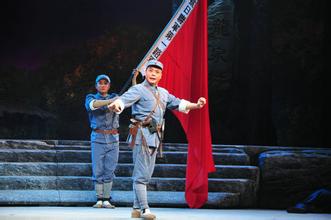
Yang Jingyu (Yang Jing Yu)
2026-10-15
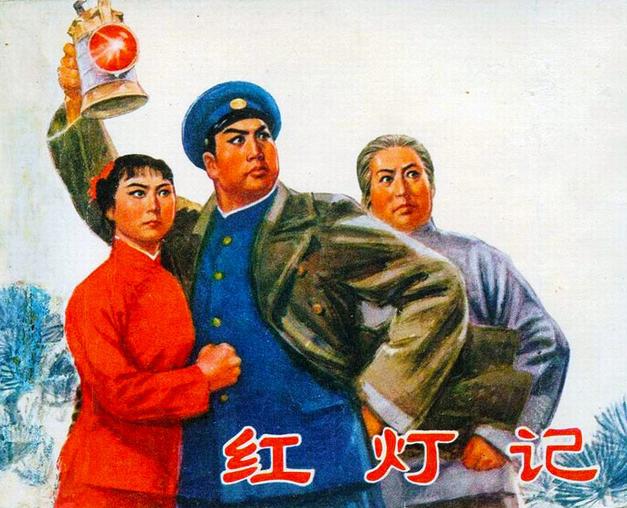
The Red Lantern (Hong Deng Ji)
2026-10-15
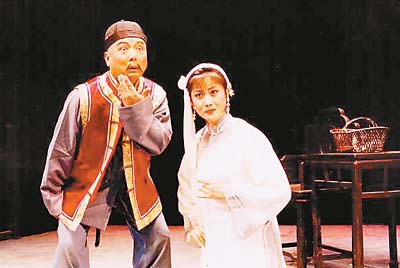
Plaster Zhang (Gao Yao Zhang)
2026-10-15