The White Snake (Bai She Zhuan)
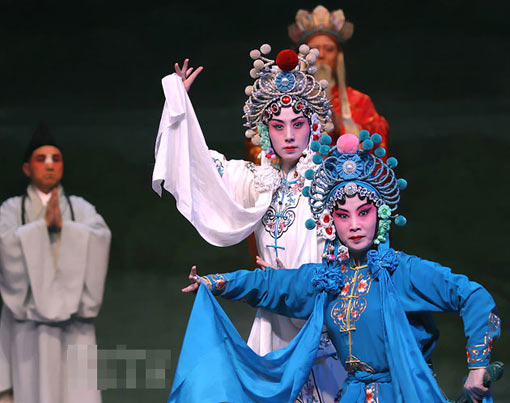
Overview. The White Snake is one of China's most famous operatic tales. Its earliest printed source is the story "Madam White Snare Forever Imprisons the Leifeng Pagoda" in the Ming collection Stories to Awaken the World (Jing Shi Tong Yan) by Feng Menglong; later came Chen Liulong's Ming chuanqi The Leifeng Pagoda Legend and the Qing tanci The Righteous Serpent. Almost every Chinese opera genre performs it, and the Peking Opera version, with its blend of civil and martial elements, is among the most distinctive.
Synopsis (Tian Han version). In 1950 Tian Han adapted the traditional myth into a 25-scene Peking Opera titled The Golden Bowl; in 1953 he revised it, restoring the title The White Snake and foregrounding an anti-feudal theme while developing the mythic colour, with fluent, beautiful lyrics. The version commonly staged today follows Tian Han's text: from the two serpents descending the mountain to tour the lake, to Xiaoqing toppling the pagoda and the Bai-Xu reunion, including the episodes of marriage, the wine transformation, herb stealing, ascending the mountain, the water battle, the broken bridge, and the bowl sealing. Tian Han dropped the early "Twin Snakes Battle" (Bai subduing Xiaoqing), the "Stealing the Treasury Silver," and the "Sacrifice at the Pagoda" (Xu Shilin offering sacrifice) episodes.
Artistic Features. "Stealing the Treasury Silver" is a wudan (martial dan) "throwing" show with broadsword and double-whip tosses, thrilling and graceful. "Sacrifice at the Pagoda" is a qingyi (principal female) singing showcase and a beginner's piece, with a famously difficult 38-line fan-erhuang aria; after Hu Xilu and Chen Delin made it famous, Mei Lanfang and Shang Xiaoyun each refined it into early Mei- and Shang-school masterworks. All Four Great Dan performed the play; Mei Lanfang staged the Kunqu scenes "Jinshan Temple" and "Broken Bridge," enriching them into a Mei-school gem. The full version has been performed by many leading dan, and Zhang Junqiu linked the three scenes into a Zhang-school staple.
Why Watch. The "Broken Bridge" scene, especially the line "Sister Xiaoqing, hold your sword no longer," is the most beloved excerpt. Living masters such as Li Shengsu, Wei Haimin, Diao Li, and Chen Shufang have performed the full work.
猜你喜欢

Rickshaw Boy (Camel Xiangzi)
2026-10-15
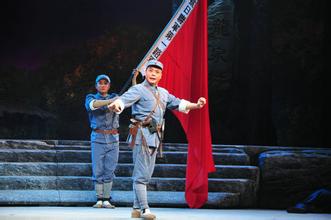
Yang Jingyu (Yang Jing Yu)
2026-10-15
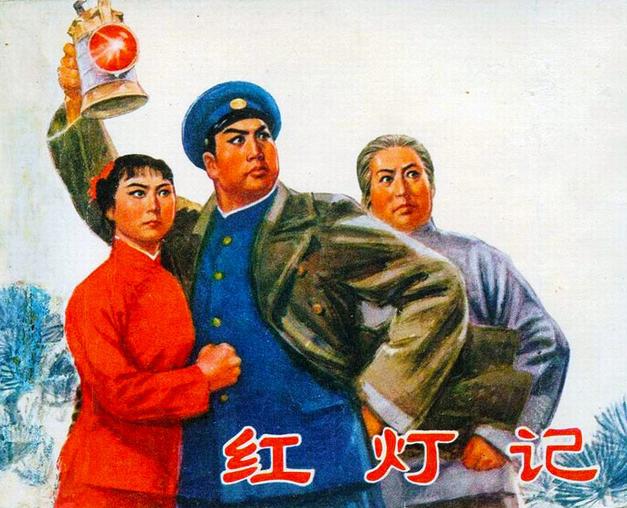
The Red Lantern (Hong Deng Ji)
2026-10-15
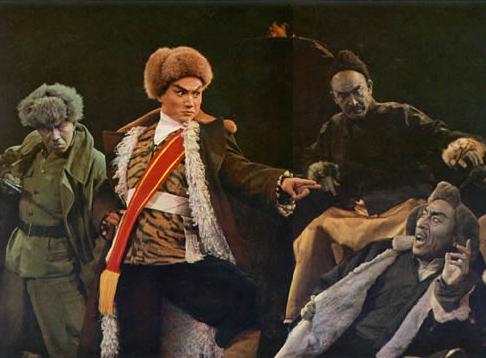
Plaster Zhang (Gao Yao Zhang)
2026-10-15