An Introduction to Peking Opera (Jingju)
Overview. Peking Opera, or Jingju, is the most influential genre of traditional Chinese theatre and is often honoured as the "national opera" of China. It took shape in Beijing in the late 18th and early 19th centuries. In 1790, to celebrate the Qianlong Emperor's birthday, the Sanqing Anhui troupe and then the other three great Anhui troupes (Sixing, Chuntai, and Hechun) came to the capital, an event historians call the "entry of the Four Great Anhui Troupes into Beijing." Over decades, the Anhui "erhuang" melody blended with the Hubei "xipi" tune, absorbing plays and performance techniques from Kunqu and Qinqiang, and gradually crystallized into an independent "pihuang" vocal system. In the late Qing it came to be called Jingju (Peking Opera) or Pingju. In 2010 UNESCO inscribed Peking Opera on the Representative List of the Intangible Cultural Heritage of Humanity.
Artistic Features. Peking Opera integrates four performative skills, chang (singing), nian (recitation), zuo (acting/mime), and da (acrobatics/combat). Its music is built on two main vocal modes, xipi and erhuang, accompanied by the jinghu (leading fiddle), yueqin (moon guitar), and percussion (drums and clappers). The role system is rigorously divided into four main categories, sheng (male), dan (female), jing (painted-face), and chou (clown), each with finer subtypes (e.g. laosheng, xiaosheng, qingyi, huadan, wudan, hualian). Stylization, virtuality, and poetic suggestion are the aesthetic core of the art.
Repertoire (a correct summary). Peking Opera has over a thousand titles. Frequently performed classics include: Farewell My Concubine (Bawang Bie Ji), a Mei-school masterpiece about Xiang Yu and Consort Yu at the fall of the Chu kingdom; Drunken Concubine (Guifei Zui Jiu), a Mei-school play of Emperor Xuanzong's consort drowning her sorrows in wine; The White Snake; The Orphan of Zhao (Zhao Shi Gu Er), from the Yuan drama by Ji Junxiang; and modern-model plays such as Shajiabang. Among the famous martial and civil plays are The Crossroads Inn, Havoc in Heaven, Changbanpo, Chaining the Five Dragons, and Tears of the Barren Mountain. (Note: The Palace of Eternal Youth is a Kunqu libretto by Hong Sheng, distinct from The White Rabbit, a Yuan-Ming nanxi about Liu Zhiyuan and Li San Niang.)
Masters and Schools. Peking Opera abounds in schools: among laosheng (older male) there are the Yu (Shuyan), Ma (Lianliang), Yan, and Tan (Xinpei) schools; among dan (female) the "Four Great Dan" of Mei (Lanfang), Cheng (Yanqiu), Shang (Xiaoyun), and Xun (Huisheng), plus the Zhang (Junqiu) school; among jing (painted face) the Jin (Shaoshan) and Qiu (Shengrong) schools.
Current Transmission. As both a national intangible cultural heritage (2006) and a UNESCO heritage (2010), Peking Opera is kept alive through state troupes, academies, and commercial performance, and is reaching younger audiences through new media and school programs.
猜你喜欢

Rickshaw Boy (Camel Xiangzi)
2026-10-15
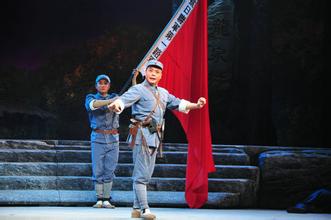
Yang Jingyu (Yang Jing Yu)
2026-10-15
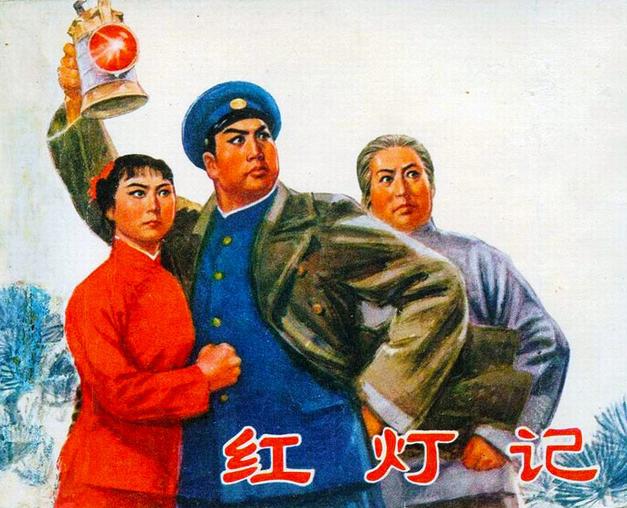
The Red Lantern (Hong Deng Ji)
2026-10-15
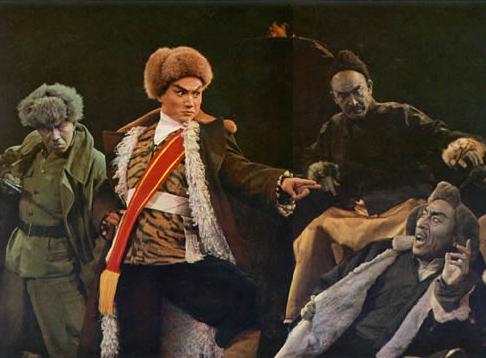
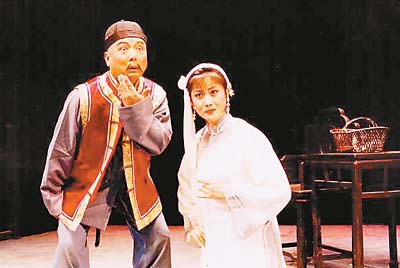
Plaster Zhang (Gao Yao Zhang)
2026-10-15