Pingju Opera Performer

The local Chinese opera known as Pingju emerged around the 1910s. It incorporates musical elements from narrative song form and folk dance. Its folk roots and colloquial language allowed it to spread throughout most of northern China, and then to other parts of the country. There are four major schools of Pingju Opera. The Bai School is the most popular in recent years. we will bring you the art and life of famous actress Wang Guanli, the fourth generation disciple of Pingju opera's Bai School.
It takes Wang Guanli three hours to do her make up before each performance.
This time, she'll be starring in Du Shiniang, a classic of Pingju's Bai School.
It's the first time for Wang Guanli to perform this opera in her hometown Tianjin in northern China.
A stream of local fans and respected leaders come to call. Wang Guanli doesn't finish her make up until show time at half past seven.
Pingju opera Du Shiniang, Wang Guanli as Du Shiniang said, "A high-class courtesan in the capital called Du Shiniang falls in love with a scholar Li Jia. She marries him after she redeems herself from the brothel with her savings. The couple then set off for Li Jia's home. When they stop in Guazhou, Li meets Sun Fu, a rich salt merchant who wants the good-looking Shiniang. Sun advises Li not to bring home a prostitute. The unfaithful scholar promises to sell Du to Sun. When Shiniang learns of the deal, she turns her wrath on both men. In sorrow and anger, she throws herself and several boxes of previously hidden priceless jewelry into the river."
Wang Guanli, Pingju performer said, "The art of the Bai School is concise and decent, it's a kind of non-action action. The performing techniques and role's emotional changes are all natural. It can touch the audience by its unadorned acting. The pitch of singing is not high, but with full articulation of every word. The rhythm is touching and graceful, very dulcet and beautiful."
Pingju opera originates from the folk song and dance-Yangge, one of the main forms of folk flower fair activities in the first month of the lunar year.
Pingju opera was formed in 1909 in the northern city of Tangshan, and received its formal name in 1923 in the neighboring city Tianjin.
In 1937, the famous actress Bai Yushuang starred in the movie Haitang Red. It came to symbolize the form of the Bai School and helped popularize the term Pingju opera throughout the country. Bai Yushuang's adopted daughter, Xiao Bai Yushuang, inherited and developed the style of the Bai School.
After the founding of the People's Republic of China in 1949, Pingju Opera came to the forefront as the national largest drama.
Wang Guanli is a fourth generation disciple of Pingju's Bai School, but was not an early Pingju apprentice. She entered the Tianjin Theatre School in 1972, majoring modern dramas.
In 1977, Wang Guanli was assigned to Tianjin Pingju Troupe.
In 1987, she switched to study the Bai School. Her rise was rapid, and it took only a few years for her to win national contests.
Gao Decheng, former deputy director of Tianjin Culture Bureau said, "She loves her art of Pingju and is surefooted. She's always thinking the play instead of other things. She studied in the master class of the Central Academy of Drama, and learned different majors and used all the skills in her own performance. In addition, other veteran artists also pinned their hopes and concerns for the Bai School on Wang Guanli and help her a lot."
In 1996, Wang Guangli began to learn Jing Yun Da Gu, a form of traditional Beijing story telling with music. Her teacher is the most famous artist in the field, Luo Yusheng. The training has greatly enhanced her performance of Pingju.
In 1997, Wang Guanli performed with Luo Yusheng at a gala to celebrate the return of Hong Kong.
Hong Kong has witnessed ups and downs in the last hundred years.
But the Pearl still gleams in the orient.
Luo Yusheng, Jing Yun Da Gu artist said, "In nine months, she has learned more than ten pieces of Da Gu. She's qualified to learn Da Gu. She has a throat with a good timbre and tone."
In 2001, Wang Guanli was transferred to the Beijing Pingju Troupe, which she helped found. It's the first national Bai School Troupe in China.
The Troupe began to rehearse or stage many traditional Bai School plays in Beijing and across the country. Wang Guanli starred in most of them.
"Her voice is beautiful, lyric, and her singing is very relaxed. She has a good sense of music, And she has a decent appearance. It's easy to get sympathy in a tragic role. Her cultural achievements are also good."
From time to time, Wang Guanli comes to this building in south Beijing to visit her vocal teacher, He Minjuan.
Vocal practice has been a must to stay in top form.
To relax, Wang Guanli likes to paint. It's partly the influence of her husband, a contemporary oil painter, but Wang Guanli also thinks painting helps her on stage.
Wang Guanli, Pingju opera performer said, "It is very hard to learn drama, but I can seek joy amidst sorrow. The learning process of a play, is very substantial and enjoyable. The real pleasure for an actress is you get the viewer's acknowledgement on the stage."
At the end of each Pingju performance, Wang Guanli likes requests to sing a Jing Yun Da Gu as a curtain call.
Applause, flowers, and a job well done: Wang Guanli has always found her own happiness on the stage.
This is the end of one Wang Guanli show, but a new beginning of her pursuit of the Pingju Opera art.
相关深度指南:京剧艺术完全指南 →
猜你喜欢
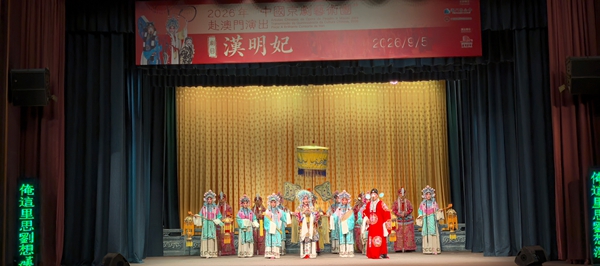
26年“中国京剧艺术团”赴澳演出交流活动圆满举办
(中国京剧艺术网讯)日前。由中国京剧艺术基金会、澳门基金会主办的2026年“中国京剧艺术团”赴澳门演出交流活动,于9月4日至8日赴澳门为市民举办公益性演出并开展京剧进校园活动,
2026-09-22

越剧化妆与扮相教学入门:小生与花旦的妆容要点
越剧妆容介于写实与生活化之间,比京剧更显清丽。掌握小生与花旦的扮相要点,是上台彩唱的必修课。底妆:以偏白粉底统一肤色,越剧不强调浓重脸谱,重在干净透亮,再薄施腮红显气色。小生眉
2026-09-20
越剧名家讲座:从《红楼梦》看越剧表演艺术
《红楼梦》是越剧最具影响力的代表作之一,也是理解越剧表演艺术的绝佳范本。在一次越剧名家讲座中,主讲人围绕此剧做了深入解析。程式与体验的统一。越剧虽程式严谨,却强调"体验派"的真
2026-09-20
越剧培训班招生:成人零基础越剧兴趣班课程介绍
为让更多成年人走近越剧,各地文化馆与戏曲院团常年开设零基础越剧兴趣班,现以典型课程为例介绍。招生对象:热爱戏曲、无基础的成年人,无需任何演唱经验,男女皆可。课程模块:第一单元发
2026-09-20
越剧身段与水袖教学:基本功训练方法
身段与水袖是越剧表演的形体语言。没有扎实的基本功,唱得再好也难传神。以下为常见训练方法。一、站姿与圆场。双脚并拢、收腹提气,形成"子午相";圆场须脚跟先着地、步子小而匀,行走如
2026-09-20